David Rogers8 min read
How to Outline a Screenplay (Even If You’d Rather Just Write It)
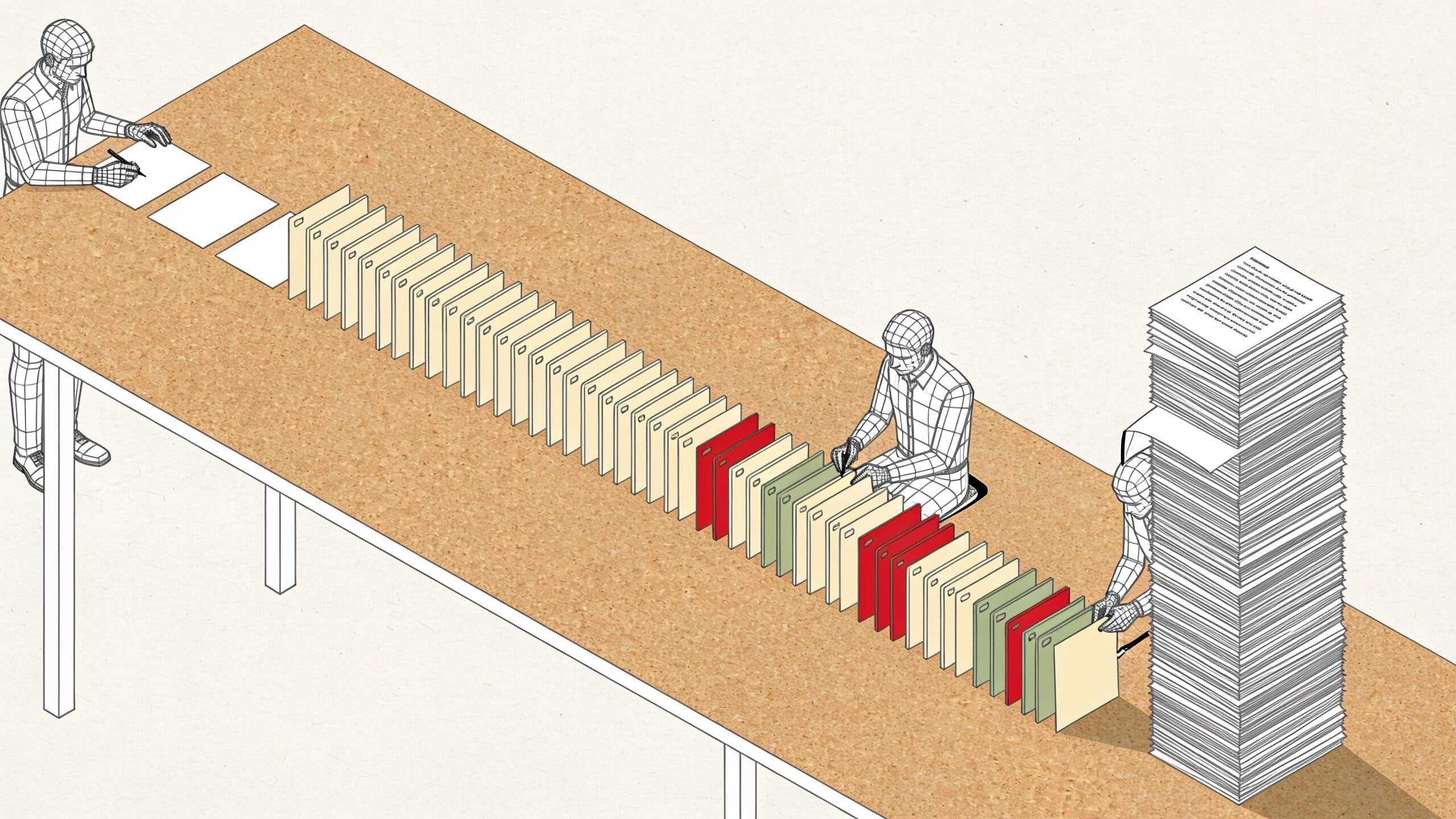
Somewhere on r/Screenwriting right now, two pieces of advice are sitting a few comments apart. One says outline everything before you write a word. The other says just bang out a terrible first draft and fix it later. A newer writer reads both, panics, and opens a blank document to write neither.
You don’t have to choose. An outline can help you find your story before you write it, or figure out what you’ve written afterward.
Writers tend to sort themselves into two camps. Planners outline before they write. Pantsers fly by the seat of their pants, finding the story as they go, and do their structural work in the rewrite, usually at 2am, while muttering, “Wait, where did the sister go?” This post covers both.
What an outline is actually for
A screenplay outline is the cheapest place to find out your story is broken.
Moving a scene in an outline costs you ten seconds. Moving it in a draft costs you an afternoon of rewriting transitions, fixing setups, and re-reading the eight pages around it. Cutting a character from an outline is a deleted line. Cutting them from a draft is an archaeology project.
A good outline lets you see the movie before you’ve written it, which means you can spot the expensive problems while they’re still cheap: a second act that sags, a subplot that drifts off and never returns, a hero who doesn’t make a real decision until page 60.
How much detail you need depends on the writer and the project, and there’s more on that below. A rough guide is that it should be detailed enough to show you those problems, and quicker to write than the draft would be.
For planners: outline forward in four layers
Outlining goes easier when you don’t try to do it all at once. Work from the outside in, one zoom level at a time, and only go deeper once the level you’re on holds up.
1. The logline
One sentence: who wants what, what’s in the way, and why we should care. If you can’t write it yet, that’s worth knowing. It usually means the premise needs more exploring before an outline will help.
Expect the logline to change as you go. It’s there to keep you pointed in a direction, and you can rewrite it whenever the story tells you something new.
2. The spine
Next, pin down the handful of moments the whole movie hangs on. Different teachers name them differently (Syd Field’s plot points, Blake Snyder’s beats, Dan Harmon’s circle), but the load-bearing ones are roughly the same:
- The opening image. Where the hero starts.
- The inciting incident. The thing that makes this day different.
- The break into Act Two. The hero commits.
- The midpoint. The stakes or the direction flips.
- The low point. Everything’s lost.
- The climax. The hero acts on what they’ve learned.
- The final image. Where the hero ends, measured against where they started.
Treat these as questions to ask about your story’s shape rather than a checklist every movie has to satisfy. One sentence per beat is plenty. If you’re choosing between frameworks, we wrote a whole post on Save the Cat and the Story Circle and why you don’t actually have to pick one.
The spine is where you’ll catch a midpoint that doesn’t change anything, or a climax the hero watches instead of causes.
3. Sequences
Feature films tend to move in chunks of roughly ten to fifteen pages, each a mini-movie with its own goal and its own turn at the end. Break the space between your spine beats into those chunks.
Give each sequence a dramatic question, not a summary. “Mark builds the site in a night” tells you what happens. “Can Mark get the site live before the university shuts him down?” tells you what the sequence is chasing, where the conflict comes from, and when it’s over: the moment the question gets answered, ideally in a way that raises the next one.
This is also how the long middle gets manageable. Sixty pages of “Act Two” is hard to think about. Four or five sequences, each with its own question, are much easier to plan one at a time.
4. Scenes, on cards
Finally, scenes, one card each. Keep them short. John August’s first tip for index cards is seven words, maximum. If you’re writing dialogue on it, you’ve started the draft by accident.
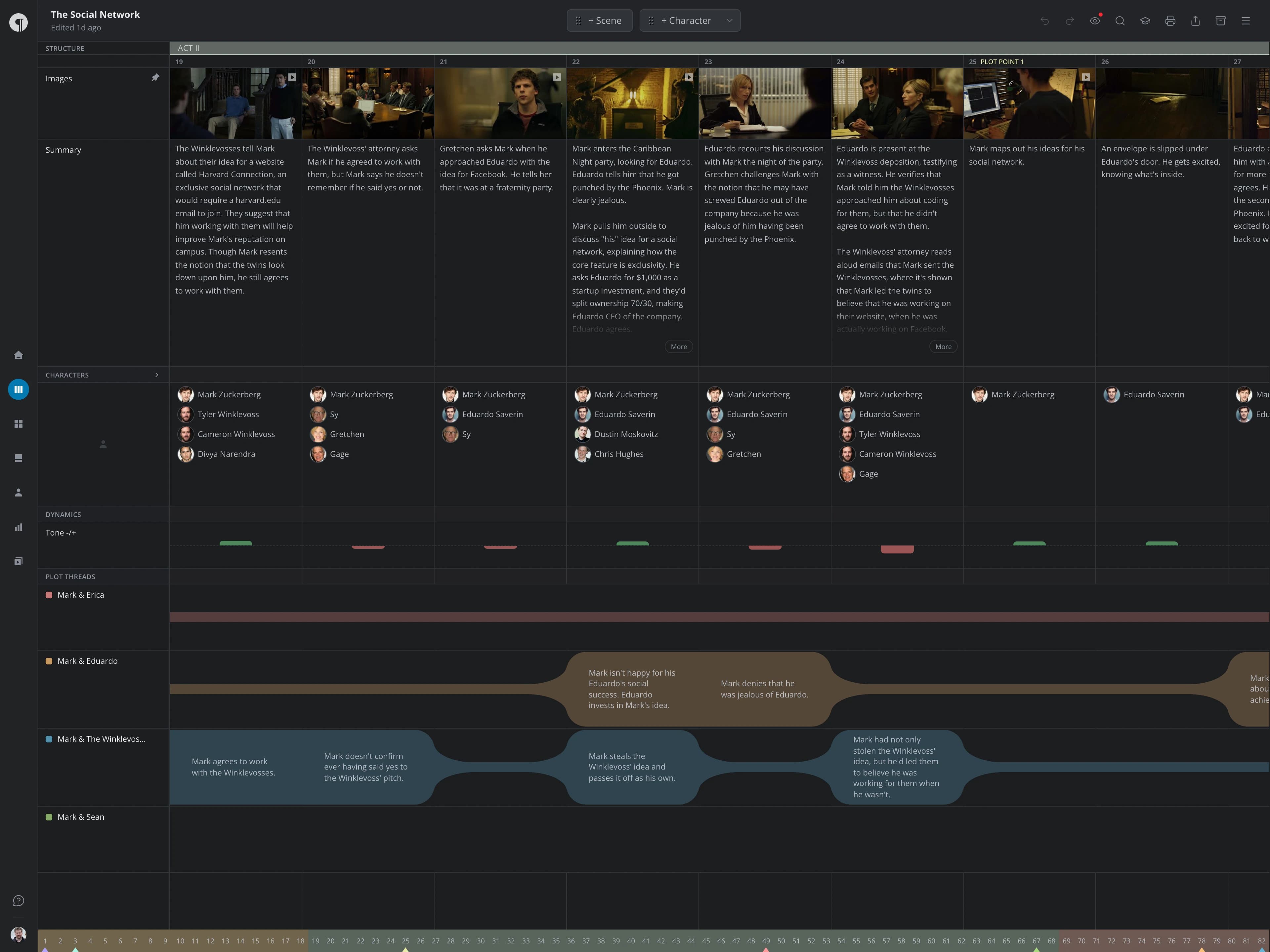
A feature might have dozens of scenes, so don’t worry about hitting a particular number. Give each storyline its own color, then lay the cards out in order. This is the layer where you can see the whole movie at once.
When to stop outlining and start writing
There’s no correct length. A spec writer might be happy with a page of beats and a stack of cards. A writer on a studio assignment might turn in an outline that runs dozens of pages, because there it’s a deliverable and somebody has to approve it before pages get written.
For your own work, two useful tests:
- Can you pitch the whole movie from the spine in a couple of minutes? If you keep stalling at the same point, that beat probably needs more work.
- Can you read any card and know what job that scene does? If not, the card is too vague. If the card reads like the scene itself, it’s more detail than you need yet.
Once both feel true, most writers are ready for pages. Plenty of good discoveries still happen in the draft, and a solid outline makes it easier to recognize which ones matter.
The page-30 problem
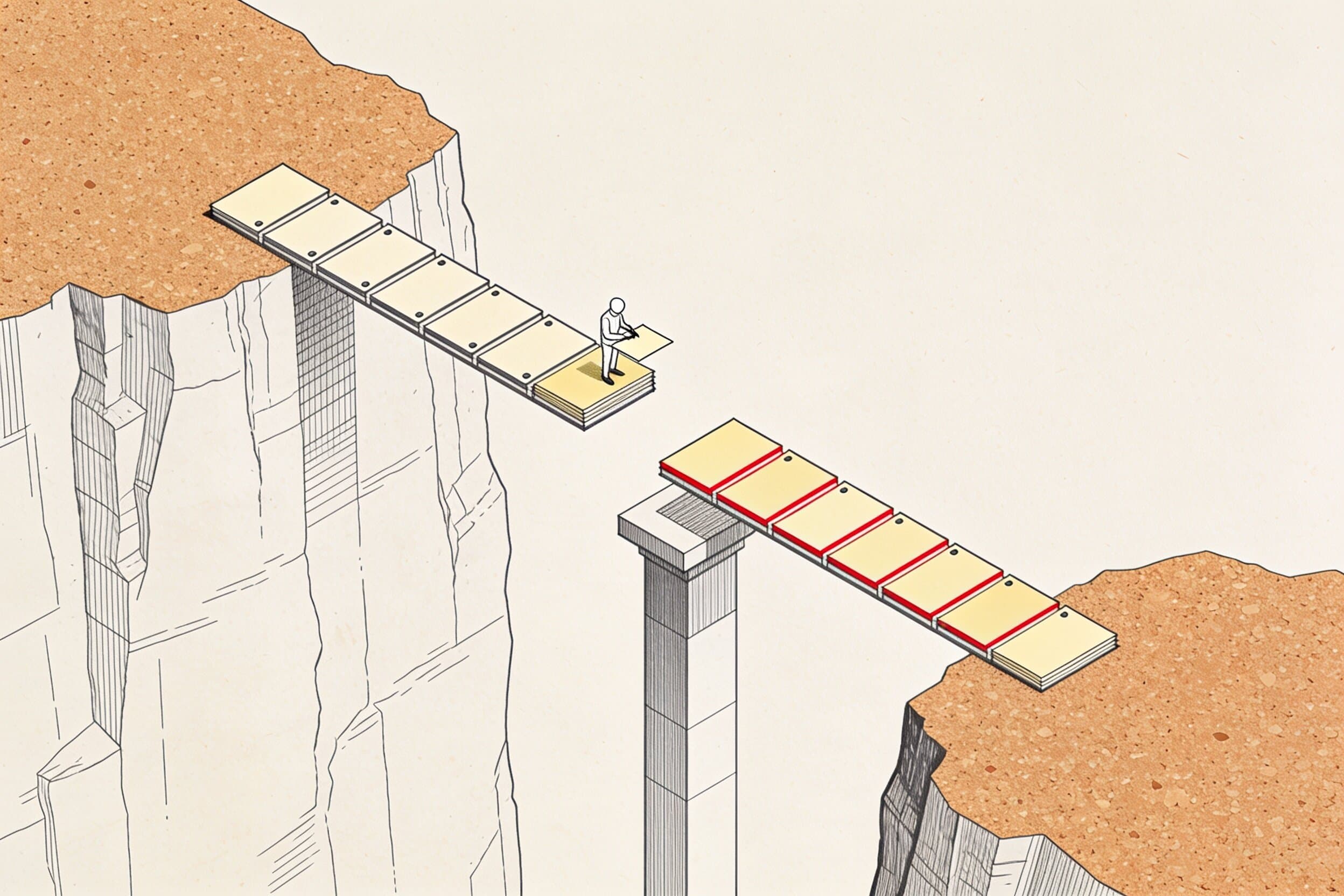
A lot of writers start a feature with real excitement and quietly abandon it a third of the way in. It hits pantsers hardest, but planners with a thin outline get it too, and it comes up constantly in screenwriting forums. The usual cause is that the writer ran out of map.
The opening often comes easily, because it’s the part you’ve been imagining longest. Then the setup is done, the hero has crossed into the new world, and there are sixty pages to fill with no clear idea of what happens in them.
An outline helps here partly because it tells you what comes next, and partly because it lets you write out of order. If the midpoint is the scene you’re excited about, write that one. The scenes that connect it to the rest of the story are a lot easier to write once both ends exist.
For pantsers: the reverse outline
So you wrote the draft without a plan. Congratulations, sincerely: that’s more than most people who “have an idea for a movie” will ever do. Now you outline it.
A reverse outline of your script works backward from what’s actually on the page rather than what you meant to put there.
- Make one card per scene. Seven words, describing what happens rather than what the scene was supposed to accomplish: “Jen yells at the landlord,” not “Jen’s arc begins.”
- Mark where your spine beats actually land, not where you planned them. If the inciting incident shows up on page 24, write “p. 24.”
- Color by storyline. Look for a color that disappears for forty pages, then reappears in Act Three expecting a hug.
- Look for duplicates. Two scenes doing the same job (two arguments with the same outcome, two “she’s lonely” scenes) usually means one of them can go.
- Fix the outline, then the draft. Rearrange, cut and add cards until the structure works, then rewrite to the new outline.
Here’s what that looks like in practice. Say your draft is a heist movie. The reverse outline shows the job offer (your inciting incident) landing on page 24, the crew not fully assembled until page 40, and the romance subplot with no cards at all between pages 35 and 80.
The cards also show three early scenes that all establish the same thing: the hero is broke. Cut two of them and the job offer moves up to around page 12. Fold the recruiting into a single sequence that ends by page 30. Then give the romance one scene in the middle that actually changes something between the two of them, so its return in Act Three has been earned.
None of those problems were invisible in the draft. They were just spread across a hundred pages. The reverse outline puts them in one place, with page numbers.
Make your outline visual
Index cards have survived decades of outlining software because they make an outline visual. Laid out on a wall or a table, they show the whole structure at once: the sag in the middle, the green cards all bunched in Act One, the storyline that stops halfway through. In a document you have to read your way to those problems one line at a time.
So whichever way you outline, get it out of a list and into something you can look at all at once, whether that’s a corkboard, a whiteboard or the floor.
Where Prewrite fits
We built Prewrite because we wanted the wall without the thumbtacks, and we wanted it to work for planners and pantsers alike.
For planners: start a story on any structure template and build it on the timeline, layer by layer, from beats down to scenes. Rearrange scenes by dragging them. Once your beats sit where you want them and each sequence has its question, write the pages in the same story, scene by scene, without copying anything into another app.
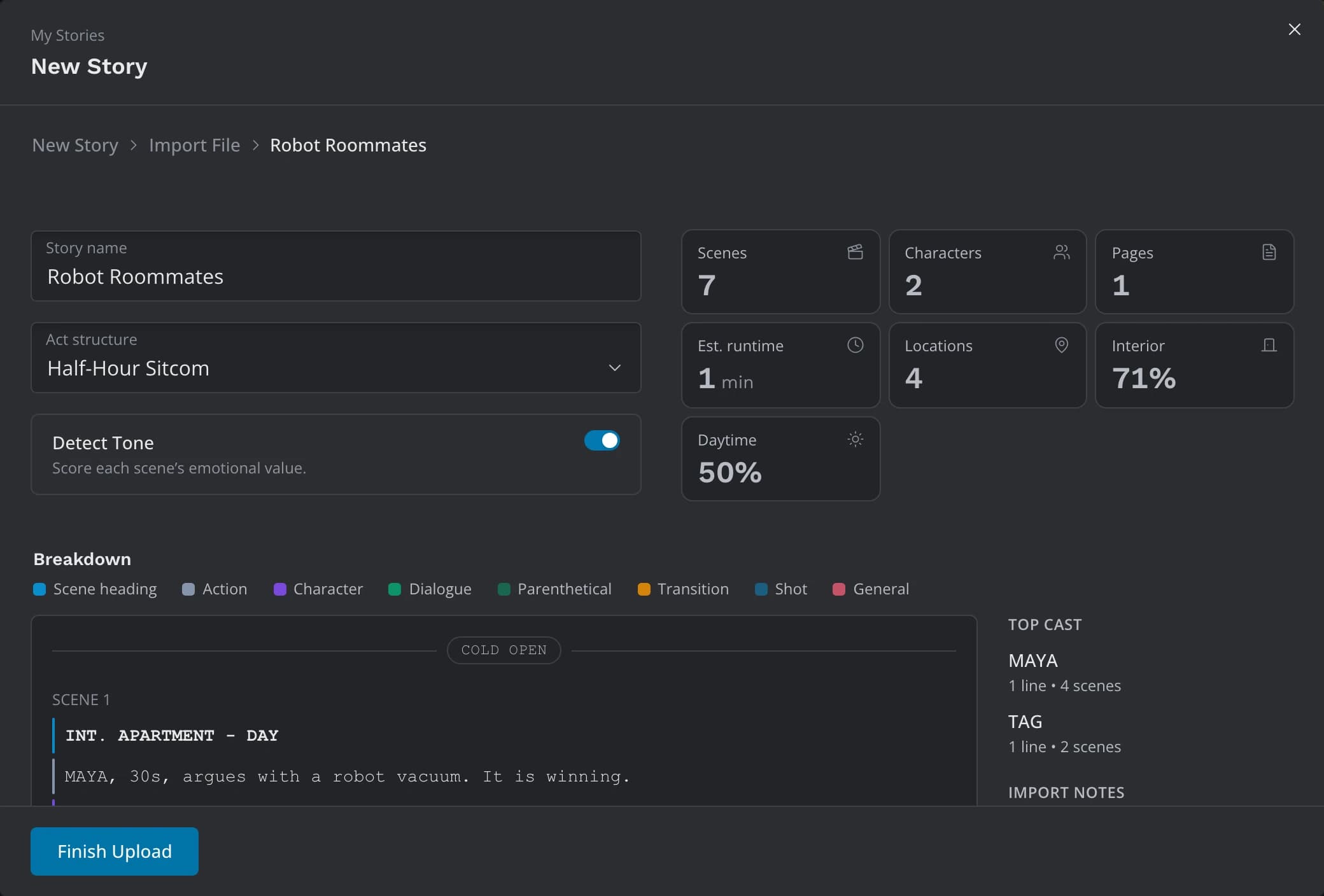
For pantsers: import the draft you already have. Prewrite breaks it into scenes on the timeline, so every scene starts out on a card. The diagnosis is still yours to do, but you’re doing it on a wall instead of scrolling a hundred pages.
When you’re ready, you can export to Final Draft or keep writing in Prewrite.
Everyone gets one free story. Bring an idea, a finished draft, or anything in between.
Happy prewriting!